
Gain access to cutting edge spatial interactomics
Mapping protein function and networks to better understand health, disease progression and drug mechanisms
Omni
Gain access to cutting edge spatial interactomics
Mapping protein function and networks to better understand health, disease progression and drug mechanisms.
Go beyond expression, understand function
- Detect up to 9 protein–protein interactions, single proteins, or phosphorylation states simultaneously
- Capture rare and transient events
- Analyze directly in human FFPE samples
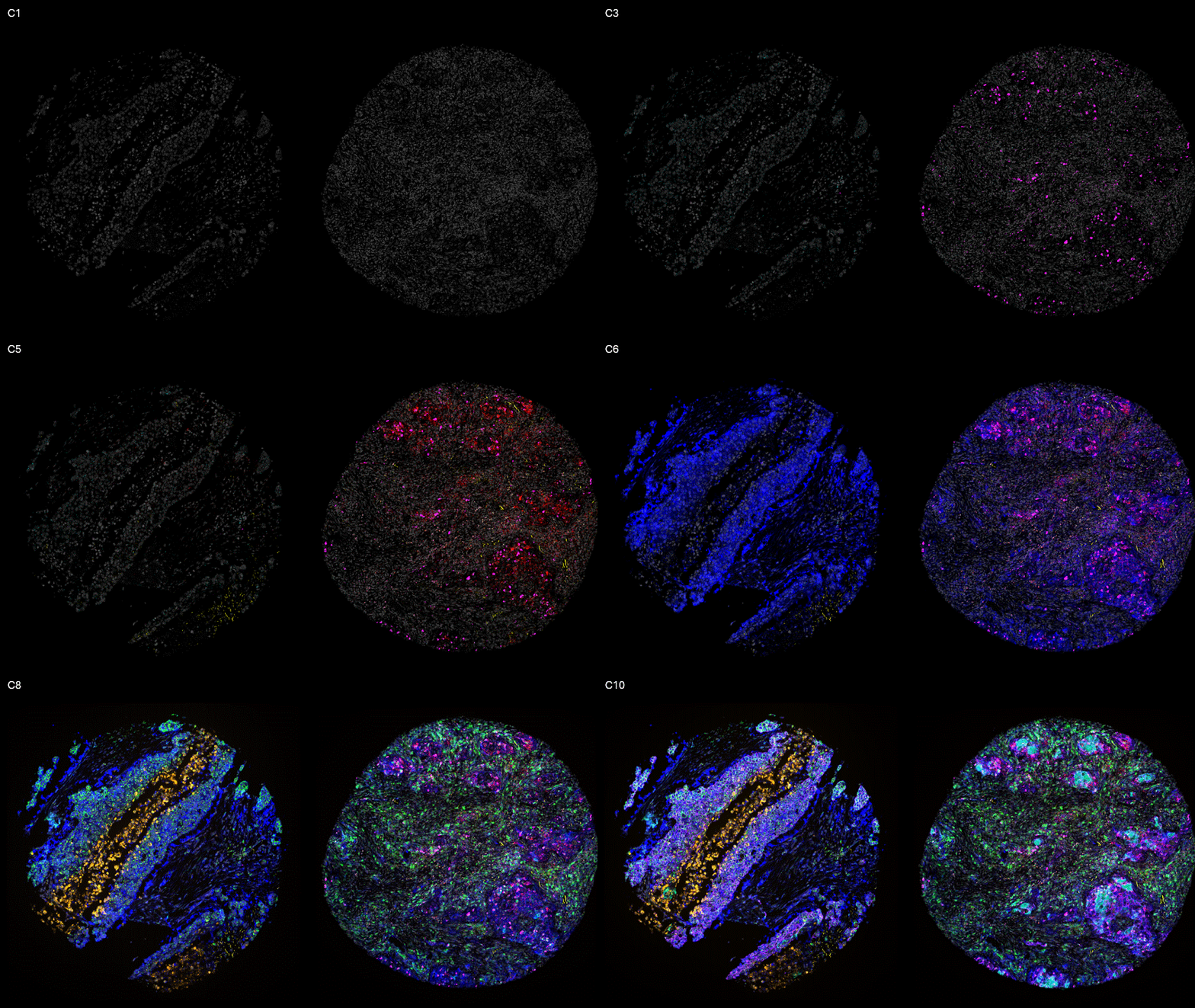
GIF: 9-plex panel on NSCLC tissue. C1) DAPI, C2) PD1/PD-L1, C3) PD1/SHP-2, C4) pEGFR, C5) GRB2/SHP-2, C6) RAF1/ERK1, C7) Fas/FADD, C8) BAX/BAK, C9) E-cadherin/ß-catenin, C10) CEACAM5
Focus on discovery, not optimization
Choose freely from our library of validated targets to build your own panel, or choose one of our pre-validated panels.
All antibodies are conjugated by Navinci, saving you time on optimization and ensuring you get the results you should.
How it works
Access our technology in the way that fits your research: a kit, so you can perform spatial interactomics in your own lab, or a full service, run by our experts. Discover the workflows below:
1
Design your panel
Design your up to 9 plex panel from our library of pre-validated targets
2
Receive your custom kit
Pre-conjugated antibodies, ready to use
3
Run your multiplex isPLA panel
Detect multiple interactions, PTMs and single protein targets simultaneously
4
Analyze spatial data
Visualise protein function directly in situ
1
Design your panel
Design your up to 9 plex panel from our library of pre-validated targets
2
Pre-study consultation
Meet with the Omni Service team to discuss project scope and timelines, and image analysis options
3
Quotation and terms
Receive detailed quotation and terms of service
4
Sample shipment
Using our detailed guidelines, samples will be shipped to Navinci HQ in Uppsala, Sweden
5
Assay run
Next generation multiplex isPLA will be run on your samples by the experts that developed the technology
6
Optional: Image Analysis
If desired, image analysis will be performed by our expert partners at Propath UK
7
Data delivery
Your data will be transferred to you using Pathcore Flow
8
Billing
The project will be concluded and billing will be completed.
Technology
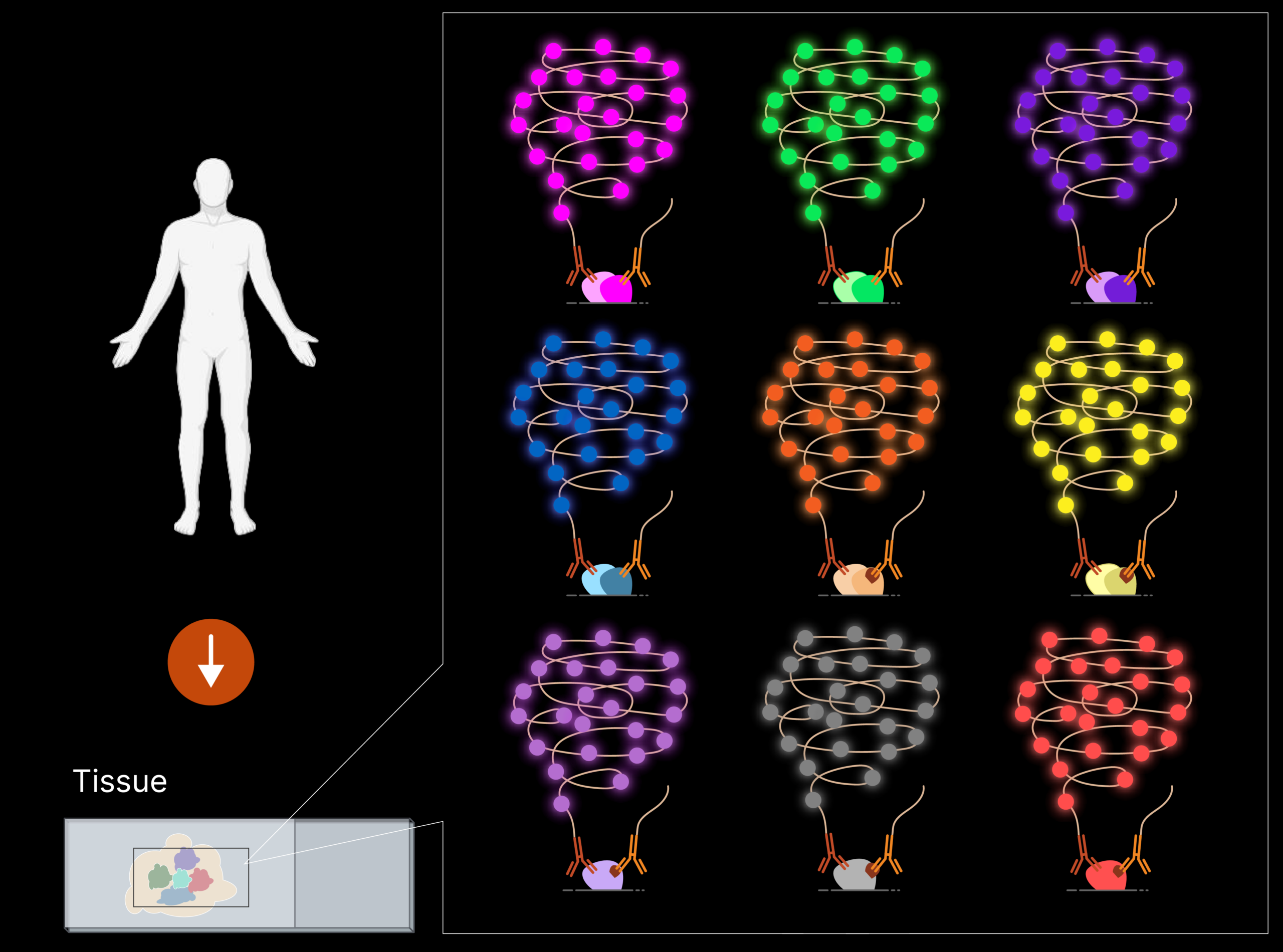
Navinci’s technology enables scientists to study protein behavior directly in cells and tissues. Omni builds on our proprietary in situ proximity ligation assay (isPLA) technology, which uses antibody–oligonucleotide pairs that generate amplifiable DNA when they bind in close proximity – revealing protein interactions and modifications.
Omni enables the detection of up to 9 different antibody–oligonucleotide pairs in a single experiment, allowing multiple protein interactions to be analyzed simultaneously. This represents the next generation of multiplex in situ proximity ligation assay (misPLA) technology.
Case study
In collaboration with Uppsala University, this proof-of-concept highlights Omni’s robust performance across both cell lines and clinical FFPE samples, delivering high sensitivity and specificity while enabling simultaneous analysis of 9 targets within a single assay.
Why choose Omni?
Capture the full picture with multiplex isPLA
Our Omni technology enables simultaneous detection of multiple protein targets, interactions and phosphorylations within the same sample, to map protein function and pathways directly in spatial context.
Optimized custom multiplex panels
Design a panel from a library of verified targets, building a custom assay tailored to your research. All antibodies are conjugated by Navinci, saving you time on optimization and ensuring you get the results you should.
High performance, no sacrifices
The technology is optimized for strong, balanced signal generation in both cells and tissue, allowing high-content spatial analysis without sacrificing sensitivity or specificity.
Pre-validated panels
Can’t decide on a panel? We’ll take care of it.
Instead of designing your own panel, you also have the choice of one of our pre-validated panels, covering key research areas:
MAPK
MAPK panel
The MAPK signaling pathway is a fundamental pathway involved in regulation of cell survival and proliferation. Faulty MAPK-signaling have been linked to development of cancer as well as e.g. Alzheimer’s disease, Parkinsons Disease and Noonan syndrome. With the MAPK-panel we can follow the signaling pathway from activation of EGFR all the way down to phosphorylation of ERK1.
Immuno-oncology
Immuno-oncology panel
PD1-PDL1 is a known immune-checkpoint inhibitor that allows APCs to interact with T-cells without getting attacked. Cancer cells can utilize this system by expressing PDL1 and thereby evade elimination of T-cells. With the IO-panel we can tell a more complete story including the often over looked PD1-PDL2 interaction, downstream events of PD1 in the T-cells as well as what type of T-cell are interacting with the different MHC-classes.
TCR/BCR
TCR/BCR panel
Follow your immune cells in tissues using the TCR/BCR panel that lets you identify different T-cells and their activation status as well as the B-cell maturation and responsiveness.